Forex Trading Versus Stock Trading: What Beginners Need to Know
Download Your Free - Forex Trading Starter Kit
Learn the key differences between Forex trading and stock trading. Discover which market suits beginners, including liquidity, leverage, and trading hours.
Introduction
Many beginners wonder whether to start with Forex trading or stock trading. Both markets offer opportunities, but they differ in structure, risk, and strategies. Understanding these differences helps you choose the market that fits your goals.
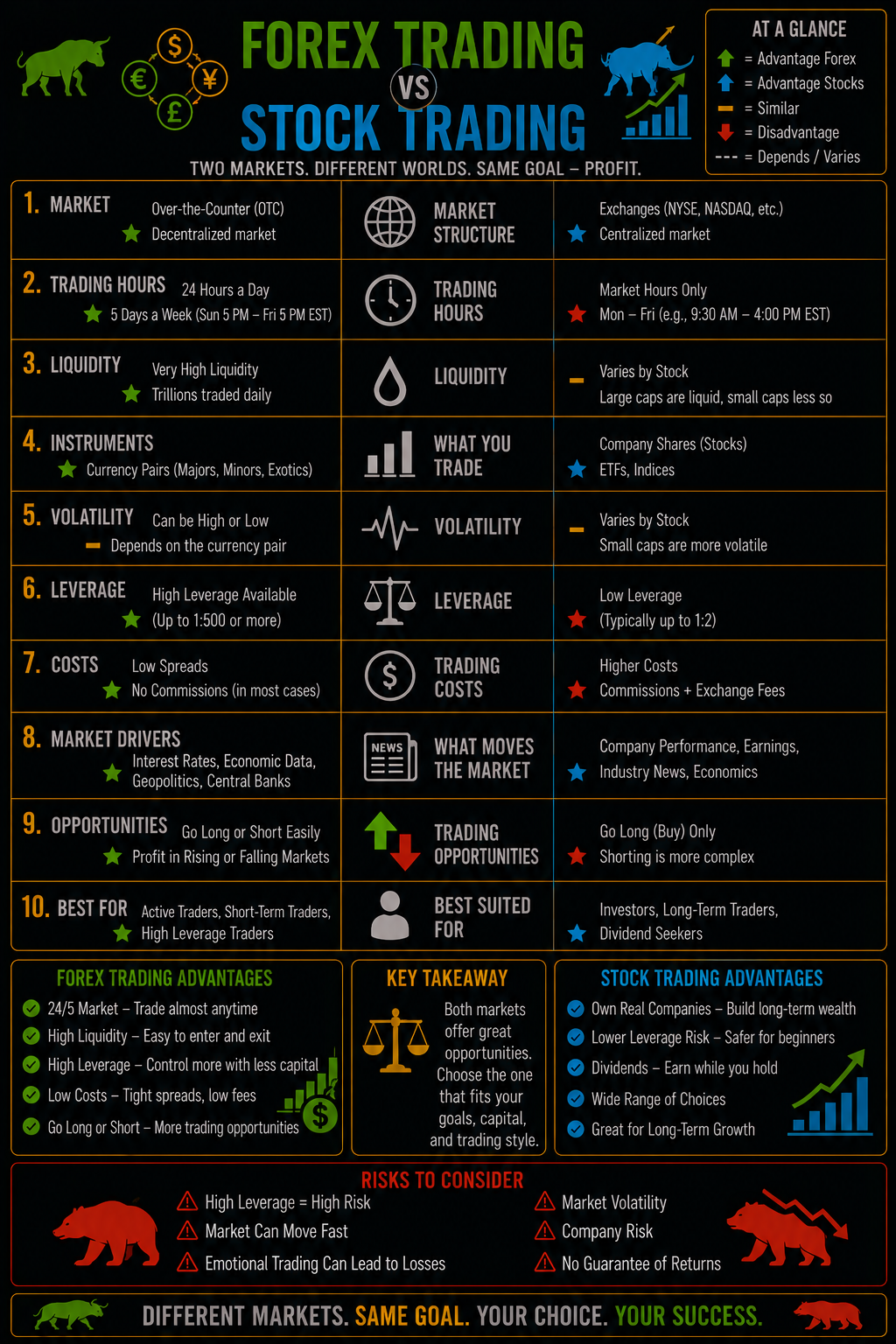
Key Differences Between Forex And Stock Trading
Feature Forex Trading Stock Trading
Market Size: Largest financial market ($7 trillion/day) Smaller than Forex (~$200 billion/day)
Trading Hours: 24 hours, 5 days/week Typically 9:30 AM – 4 PM local exchange hours
Liquidity: Extremely high, especially major currency pairs Varies by stock; high-volume stocks are more liquid
Leverage: High (50:1, 100:1, even 500:1) Typically low (2:1 or 5:1 for retail traders)
Volatility: Moderate to high, but predictable during sessions Can be volatile, especially during earnings/news
Market Influences: Economic indicators, interest rates, geopolitical events Company earnings, news, industry trends
Transaction Costs: Low spreads, no commissions on most brokers Broker fees, spreads, and sometimes commissions
Advantages of Forex Trading
- 24-hour market → trade anytime
- High liquidity → easy entry/exit
- Low capital requirements → start with $50–$500
- Leverage opportunities → trade bigger positions with less capital
Advantages of Stock Trading
- Ownership in a company → long-term investment potential
- Dividends → additional income besides price appreciation
- Less leverage risk → safer for conservative traders
- Well-regulated markets → transparent trading environment
Which Market is Better for Beginners?
Forex is better if you want:
- Short-term trades or active day trading
- Small capital with leverage
- A global market open 24/5
Stocks are better if you want:
- Long-term investing and ownership
- Lower leverage and risk
- Focus on specific companies and industries
Pro Tip: Many traders start with Forex for skill-building and liquidity, then diversify into stocks as they gain experience.
Start Trading Confidently
Ready to explore Forex trading? Our Free Forex Trading Starter Kit gives you:
- Step-by-step beginner guidance
- Risk management tools
- Demo account setup instructions
Download the Free Starter Kit and start trading today!
Conclusion
Forex trading and stock trading have different advantages and risks. Beginners should evaluate their goals, risk tolerance, and available time to choose the market that fits them. Forex offers flexibility, liquidity, and leverage, while stocks provide ownership, dividends, and long-term growth potential.

Download Your Free - Forex Trading Starter Kit
👉 “Get Instant Access (Check Your Email)”
💥 IMPORTANT: One Last Step Required
After you enter your email, check your inbox (or spam folder) for a confirmation email.
👉 Click the confirmation link so I can send you your free Forex training.
⚠️ If you don’t confirm, I can’t send you anything.
👉 “⚠️ Access expires if not confirmed within 24 hours minutes.”
👉 “Takes 10 seconds. Instant access after email confirmation.”