How The Forex Market Works
Download Your Free - Forex Trading Starter Kit
How The Forex Market Works: Beginner’s Guide
How The Forex Market Works: Beginner’s Guide
Discover how the Forex market works. Learn about currency pairs, trading hours, major players, and how global events affect currency prices.
Introduction
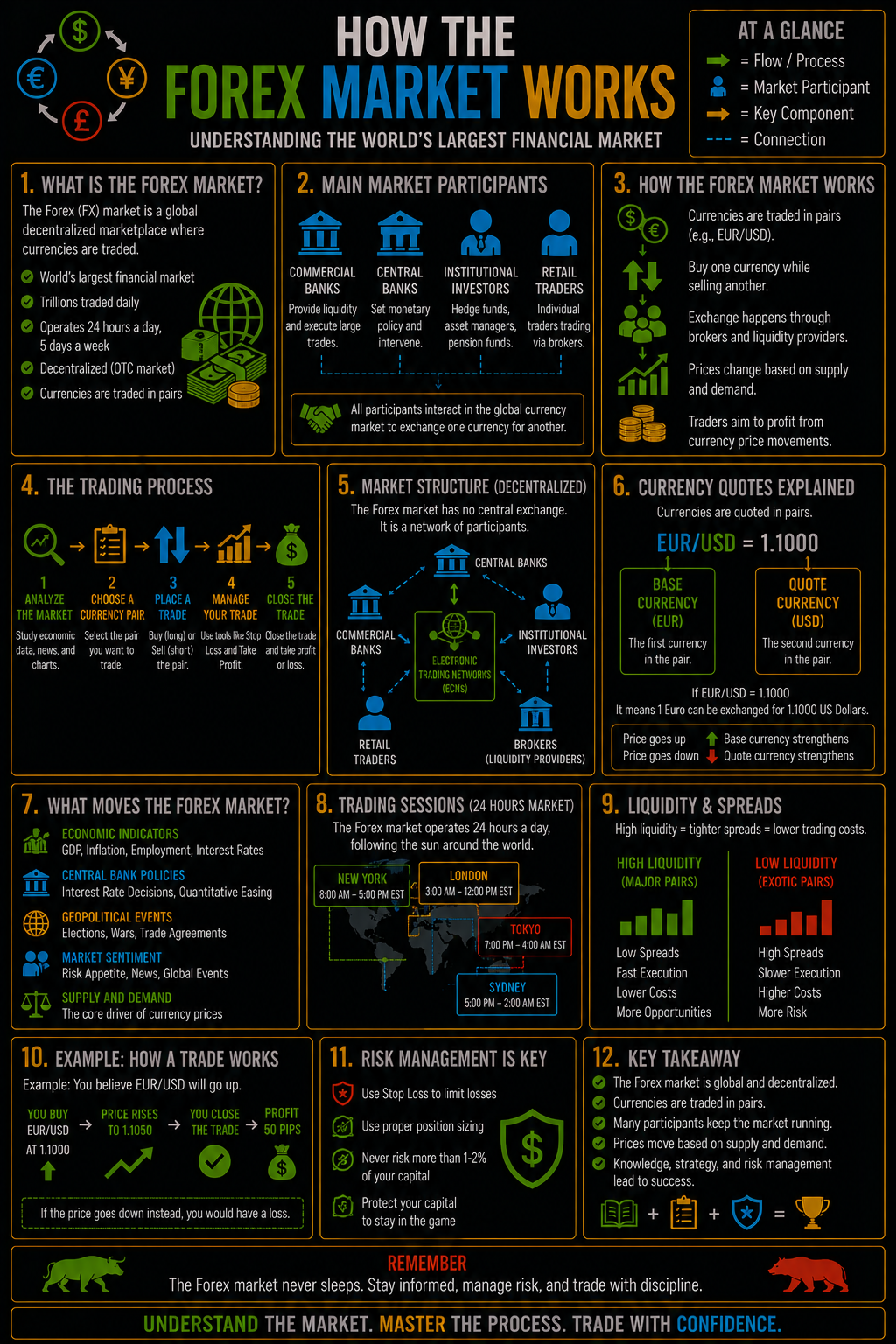
The Forex market is the largest financial market in the world, with over $7 trillion traded daily. But how does it actually work? Understanding the market structure, participants, and trading dynamics is essential for anyone starting in Forex.
What is the Forex Market?
The Forex market, also called the foreign exchange market, is where currencies are bought and sold. Unlike stock markets, Forex is decentralized, meaning there’s no central exchange. Trades happen over-the-counter (OTC) through banks, brokers, and online platforms.
Key Features:
- Operates 24 hours a day, 5 days a week
- Most traded currencies are USD, EUR, JPY, GBP
- Trades happen globally, spanning New York, London, Tokyo, and Sydney sessions
Currency Pairs
Forex trading always involves two currencies, called a currency pair.
Example: EUR/USD
- Base currency: EUR (first currency)
- Quote currency: USD (second currency)
- If EUR/USD rises, the euro strengthens against the U.S. dollar.
Types of Pairs:
- Major Pairs: USD/EUR, USD/JPY, GBP/USD (most liquid)
- Minor Pairs: EUR/GBP, AUD/NZD (less traded)
- Exotic Pairs: USD/TRY, EUR/SGD (higher risk, higher volatility)
Who Trades Forex?
Forex participants include:
- Central Banks & Governments – control monetary policy and intervene in currency markets
- Banks & Financial Institutions – provide liquidity and trade large volumes
- Corporations – hedge currency risk from international business
- Retail Traders – individuals like you trading via brokers
Insight: Understanding who moves the market can help predict trends and volatility.
How Prices Are Determined
Currency prices are influenced by:
- Supply & Demand: More buyers than sellers push prices up
- Economic Indicators: GDP, unemployment, inflation
- Interest Rates: Higher rates attract foreign investment
- Political Events: Elections, trade agreements, geopolitical conflicts
Pro Tip: Always track news and economic calendars to anticipate market movements.
Trading Sessions
Forex operates 24/5, divided into four main trading sessions:
- Sydney Session – quiet, low volatility
- Tokyo Session – moderate volume, JPY pairs active
- London Session – high activity, most liquid session
- New York Session – overlaps London session, highest volatility
Tip: Trade when your preferred currency pairs are most active to maximize opportunities.
Conclusion
Understanding how the Forex market works is essential before trading. By knowing market structure, participants, currency pairs, and session times, beginners can trade smarter and manage risk effectively.
Download Your Free - Forex Trading Starter Kit
👉 “Get Instant Access (Check Your Email)”
💥 IMPORTANT: One Last Step Required
After you enter your email, check your inbox (or spam folder) for a confirmation email.
👉 Click the confirmation link so I can send you your free Forex training.
⚠️ If you don’t confirm, I can’t send you anything.
👉 “⚠️ Access expires if not confirmed within 24 hours minutes.”
👉 “Takes 10 seconds. Instant access after email confirmation.”