How To Trade Volatility In The Forex Markets
Turn Chaos Into Profit
Discover How Smart Traders Exploit Volatility for Consistent Gains
Volatility is where the real money is made in the forex markets—but only if you know how to control it, read it, and trade it with precision.
Most traders fear volatility. Professional traders hunt it.
In this guide, you’ll learn how to identify explosive market conditions, apply high-probability setups, and manage risk like a pro—so you can turn fast-moving price action into consistent trading opportunities.
What Is Volatility In Forex Trading?
Volatility measures how aggressively price moves within a given period. The higher the volatility, the greater the potential for rapid gains—or losses.
Key Drivers of Forex Volatility:
- Economic data releases (CPI, NFP, GDP)
- Central bank decisions & interest rate changes
- Geopolitical events
- Market sentiment shifts
- Liquidity cycles (London & New York sessions)
Understanding these drivers gives you a massive edge in anticipating market movement before it happens.
Why Volatility Is a Trader’s Best Friend
Volatility creates opportunity. Without movement, there is no profit.Benefits of Trading Volatility:
- Larger price swings = bigger profit potential
- Faster trade setups
- More frequent opportunities
- Strong directional moves
But without strategy? Volatility becomes dangerous.
That’s why you need a structured approach.
The 3 Types of Volatility Every Trader Must Understand
1. Low Volatility (Consolidation Phase)
- Tight ranges
- Reduced trading opportunities
- Ideal for breakout preparation
2. High Volatility (Expansion Phase)
- Strong directional moves
- Increased momentum
- Ideal for trend traders
3. Event-Driven Volatility
- News spikes
- Sudden reversals
- Requires precision and discipline
Proven Strategies To Trade Forex Volatility
1. Breakout Trading Strategy
When volatility expands, price often breaks out of consolidation zones.
How to Trade It:
- Identify tight ranges or support/resistance zones
- Wait for strong breakout confirmation
- Enter on momentum with volume
- Place stop-loss inside the range
2. Volatility Expansion Setup
Markets move from low volatility → high volatility cycles.
Your Edge:
- Use indicators like ATR or Bollinger Bands
- Look for volatility compression
- Enter when expansion begins
3. News Trading Strategy
Major economic releases create explosive moves.
Execution Tips:
- Trade AFTER the initial spike (avoid emotional entries)
- Focus on direction confirmation
- Use tight risk controls
4. Trend Riding in High Volatility
Once volatility confirms direction, trends can accelerate fast.
Best Practices:Risk Management: The Key To Surviving Volatility
- Trade with the trend
- Use pullbacks for entry
- Trail your stops to lock in profits
Risk Management: The Key To Surviving Volatility
If you don’t control risk, volatility will destroy your account.Golden Rules:
- Never risk more than 1–2% per trade
- Always use stop-loss orders
- Avoid over-leveraging
- Reduce position size during extreme volatility
Professional traders don’t just focus on profits—they focus on capital preservation first.
Best Indicators For Trading Volatility
- Measures market volatility
- Helps set stop-loss levels
- Identifies volatility expansion and contraction
- Signals breakout opportunities
- Helps confirm trend direction during volatile conditions
The Biggest Mistakes Traders Make
Avoid these costly errors:
- Trading without a plan during news events
- Overtrading in choppy markets
- Ignoring risk management
- Chasing price after big moves
- Using too much leverage
Volatility rewards discipline—not emotion.
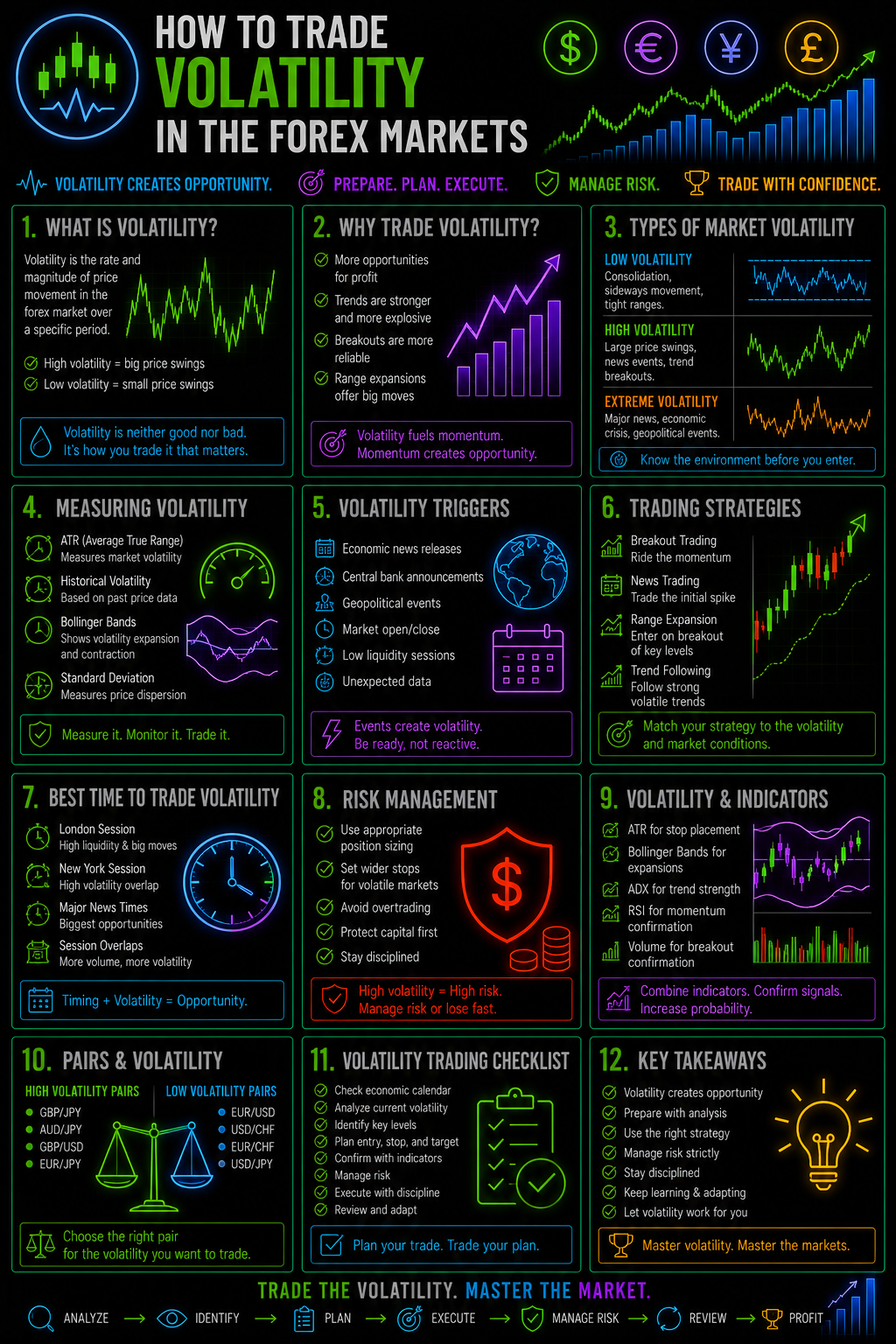
How To Build Your Volatility Trading Edge
To consistently profit, you need a repeatable system:
✔ Identify volatility conditions
✔ Choose the right strategy
✔ Execute with discipline
✔ Manage risk aggressively
✔ Review and refine your trades
This is how amateurs become professionals.
Ready To Master Forex Volatility?
If you’re serious about trading success, you need more than just strategies—you need a complete system.
👉 Get Your Free Forex Trading Starter Kit
- High-probability setups
- Risk management blueprint
- Market timing strategies
👉 Upgrade To The FTU Elite Trading System - Coming Soon
- Proven volatility trading models
- Step-by-step execution frameworks
- Real-world trading insights from 37+ years of experience
Final Thoughts
Volatility is not something to fear—it’s something to master.
Once you understand how the market moves and how to position yourself correctly, volatility becomes your greatest advantage.
The question is: Will you react to the market… or learn to control it?
Frequently Asked Questions (FAQ)
Is volatility good for forex trading?
Yes. Volatility creates price movement, which is necessary for profit opportunities.
What is the best time to trade volatility?
During major sessions (London & New York overlap) and high-impact news events.
Can beginners trade volatility?
Yes—but only with strict risk management and a structured strategy.
What pairs are most volatile?
GBP/JPY, EUR/USD, and GBP/USD are known for strong movement.
Internal Resources To Boost Your Edge
- Forex Risk Management Guide
- How Interest Rates Influence Forex Markets
- ATR Forex Trading Strategy
- Bollinger Band Forex Strategy
- Momentum Confirmation Trading Guide
Explore these to deepen your edge and increase your consistency.
Start trading smarter. Start trading volatility.
👉 “Get Instant Access (Check Your Email)”
💥 IMPORTANT: One Last Step Required
After you enter your email, check your inbox (or spam folder) for a confirmation email.
👉 Click the confirmation link so I can send you your free Forex training.
⚠️ If you don’t confirm, I can’t send you anything.
👉 “⚠️ Access expires if not confirmed within 24 hours minutes.”
👉 “Takes 10 seconds. Instant access after email confirmation.”